£5,995.00

This intensive five-day programme builds on the Oil Trader Academy foundation, taking participants deep into advanced trading concepts and real-world applications. The first two days focus on analytical and practical foundations—covering market structure, time spreads, arbitrage mechanics, blending, market making, hedging strategies, crude and product correlations, and the Brent complex—through structured case studies and decision-based exercises drawn from expert trading experience.
The following three days immerse participants in highly interactive, computer-based trading simulations that replicate complex market scenarios. These simulations reinforce theory through hands-on practice, enabling participants to apply advanced strategies in storage optimisation, time spreads, customer flow, chartering, freight trading, and options. Led by seasoned former traders, this academy offers a unique opportunity to master oil trading in a dynamic, experiential format.
Course duration: 5 days
Session 1: Principles of Hedging in Practice
– Hedging as offsetting price risk with derivatives
– Equal and opposite – defining the correct hedge
– Liquidity vs relevancy: choosing the right instrument
– Alternatives to a perfect hedge:
*Basis risk
*Spread trades
– Correlation: how prices are related and why correlations matter for risk management
Time Spreads & Market Structure
– Review of market structure: flat, backwardation, contango
– Front-to-back positions
– Basis risk and speculation when trading time spreads
Scenario Exercise: Time Spreads from Fundamentals
Session 2: Physical Arbitrage in Oil Trading
Arbitrage: Concept & Mechanics
– Definition and logic of moving oil between regions
– Value components of an arbitrage:
*Different regional prices
*Payment terms
*Freight, demurrage and operational constraints
– Identifying where and when arbitrage can be locked in
Group Exercise: Diesel Arbitrage Singapore → ARA
Session 3: Spread Trading & Cross-Market Relationships
Spread Trading Foundations
– Correlation scale: –1 to +1 and what it means for trading strategies
– Types of spreads and when to use them
Arbitrage Spreads
– Same / similar underlying:
*WTI vs Brent
*MOPS Diesel vs NWE Diesel
*Nymex RBOB vs Eurobob
– Similar / different underlying:
*Brent / Dubai
*WTI / Dubai
*NWE Naphtha vs Nymex RBOB
Intramarket Spreads
– Same / similar underlying:
*Diesel / Gasoil, Jet / Kero
*LSFO / HSFO, 180 / 380 CST
*95 / 92 octane, FOB / CIF
– Different underlying:
*Regrade, Jet Diff
*Eurobob / Naphtha
*Gasoil / Fuel
– Cracks: Product Price minus Crude Price
*MOPS Diesel – Dubai, HO-WTI, 3:2:1, etc
*Refining margins
– Time Spreads: anticipation of market structure
*”Front-to-Back”
*View on S&D in front of market
*Long term structural view
Cracks & Refining Margins
– Definition of crack spreads: product price minus crude price
– Examples and structures:
*MOPS Diesel – Dubai
*HO–WTI
*Refining Margins
Time Spreads:
– Using time spreads to anticipate market structure (“front-to-back”)
– Forming views on supply & demand in front of the curve
– Long-term structural views
Session 4: Market Making: Role & Techniques
– Providing bids and offers in most market conditions
– How to make money on the bid/offer spread
– Having an “axe”: positioning and bias on bid vs offer
– Differences between:
*Formal market makers on exchanges
*More informal market makers in oil markets (and how they can “flake”)
Session 5: Blending: Technical & Economic Perspectives
Blending Fundamentals
– Linear vs non-linear blending
*Linear: simple averages of two components
*Non-linear: properties like viscosity and flash point
– Linear example: blending sulphur for diesel or fuel
– Non-linear viscosity examples
– When no formula exists: flash point and the need for dilution judgement
Blending Economics Exercise:
– Goal: achieve the final spec in the cheapest way possible
– Comparing blending options (e.g. high-vis vs mid-vis vs kero)
– Other spec limits:
*RVP and seasonal constraints
*Metals, sulphur, colour, benzene, FAME, flash, etc.
– Blending crude oil:
*Why refineries blend crude before distillation
*Non-linearity of yields and acceptable ranges
Short Case Discussion: Compatibility & Stability
Session 6: Freight Hedging with FFAs
Freight Hedging Exercise
– Delegates work through a simple route-hedging example:
*Identify exposure from a fixture
*Choose an appropriate FFA hedge
*Discuss basis and liquidity risk
Session 7: Brent Complex
– Brent as a brand and benchmark
– Brent Physical Market: BFOETW cargoes
– Brent forwards (BFOE/BFOET) and paper vs physical
– Brent futures: pricing vs Dated Brent
– Brent derivatives:
*Swaps on Dated and on ICE futures
*CFDs, DFLs
*EFPs: exchanging futures for physical
Session 8: Options & Option Pricing for Oil Traders
– What is an option? Calls & puts
– Vanilla vs exotic structures (high-level)
– Basics of pricing:
*Probability of exercise
*Delta, Gamma, Theta, and volatility
*Black-Scholes Option Pricing Model:
Physical Options in Oil Trading
– Creating options via deal structure:
*Quantity, quality, timing, pricing, payment terms
– Identifying embedded optionality in cargo and contract design
– How to monetise or protect optionality with derivatives
Opening Welcome and Introduction
-Introductions, course objectives and contents.
Time Spreads Review
– A concise overview of trading concepts, highlighting various tradable spreads and emphasizing market structure and time spreads.
Time Spreads – SIMULATION
– The delegate receives market news and converts it into RBOB time spread positions while managing their value-at-risk trading limit.
Simulation Review
– The TwoTwoFive facilitators will highlight the key market drivers and learnings from the simulation, encouraging the sharing of trade ideas and strategies.
Crude Derivatives & Market Making
– This session offers a comprehensive overview of the oil market, focusing on derivatives, as well as the global supply and demand for oil.
– It introduces the concept of a market maker, who acts as a liquidity provider by quoting prices for both buying and selling.
– The session also discusses the associated risks and hedging techniques.
– Practical examples of trading arrangements are provided to contextualise the strategies and operational considerations faced by traders in this space.
Market-making – SIMULATION
– The delegate is either a speculator or a market maker.
– They trade futures and fixed-price cargoes (similar to forward contracts) to add liquidity and engage in entrepreneurial trading for profit.
Simulation Review
– The TwoTwoFive facilitators will highlight the key market drivers and learnings from the simulation, encouraging the sharing of trade ideas and strategies.
Physical Trading – Arbitrage, Hedging and Blending Review
– Overview of arbitrage mechanics, hedging, and cargo pricing.
– This session covers the characteristics of blending, both linear and non-linear, and outlines the considerations necessary for conducting these activities.
Distillate Contracts – SIMULATION PART 1
– As a distillate trader, the delegate begins with inherited global physical positions and access to a biodiesel blending facility.
– Facilitators guide the simulation to allow everyone to place trades, identify opportunities, and mitigate losses and risks.
– Participants will engage in chartering vessels, blending, trading freight futures (FFAs), and interacting with the open market and other delegates.
Close
– Review & Wrap Up.

Distillate Contracts – SIMULATION PART 2
– As a distillate trader, the delegate begins with inherited global physical positions and access to a biodiesel blending facility.
– Participants will engage in chartering vessels, blending, trading freight futures (FFAs), and interacting with the open market and other delegates.
Simulation Review
– The TwoTwoFive facilitators will highlight the key market drivers and learnings from the simulation, encouraging the sharing of trade ideas and strategies.
Backwardation/Contango review, Correlations etc
– Review of market structure and the contango play concept.
– Introduction to hedging, liquidity issues, alternatives and the use of correlations.
Storage – SIMULATION
– As a crude oil trader, the delegate identifies contango play opportunities based on 1, 2, 3, 6 and 12-month tankage lease period economics.
– Uses Brent time spreads to hedge and speculatively monetise the market structure.
Simulation Review
– The TwoTwoFive facilitators will highlight the key market drivers and learnings from the simulation, encouraging the sharing of trade ideas and strategies.
Customer Flow SIMULATION PART 1
– As a distillate trader, the delegate begins with inherited global physical positions and must manage the associated hedging when cargoes price, charter vessels and FFAs.
– Delegates navigate liquidity traps and utilize the most beneficial derivatives for risk mitigation and value addition.
Customer Flow – SIMULATION PART 2
– Continuation of the physical portfolio management simulation.
Simulation Review
– The TwoTwoFive facilitators will highlight the key market drivers and learnings from the simulation, encouraging the sharing of trade ideas and strategies.
Close
– Review & Wrap Up.
Brent Complex
– The session outlines the key components of the Brent Complex, including ICE Brent futures, BFOE™ cash contracts, Platts Dated Brent, and CFD/DFL swaps.
– Explains how these instruments are interconnected and how prices are derived using methods such as – – Dated-to-Front-Line and Exchange of Futures for Physicals (EFPs).
Settlement Prices and Pricing Windows
– Details how settlement prices are determined, emphasising the role of the S&P Global Platts pricing window and the Market-on-Close (MOC) methodology.
– Highlights the importance of settlement prices and various types of contract settlements.
Pricing Window SIMULATION
– As crude traders, the delegates enter the physical pricing window with opposing positions to set the price as they bid or offer.
Freight Optimisation and Trading
– Overview of key aspects of arbitrage and how chartering, freight, and operations teams create value through close collaboration with trading teams.
Chartering and Freight Trading SIMULATION
– As part of a chartering team, delegates use their market view on freight rates to speculate on FFAs and decide when best to charter vessels.
Simulation Review
– The TwoTwoFive facilitators will highlight the key market drivers and learnings from the simulation, encouraging the sharing of trade ideas and strategies.
Option Theory Review
– Review of oil financial options, covering types, terminology, payoff structures, and the Greeks (Delta, Gamma, Theta, Vega, Rho).
– Explains how to manage physical cargo portfolios as real-world options and calculate intrinsic and extrinsic value.
Physical Portfolio modelled as options SIMULATION
– Delegates identify physical options in potential cargo arbitrage and develop models to determine value.
– Utilises derivatives to capitalise on market volatility until the point of deciding whether to load the cargo.
Course Close
– Overall Course Review & Wrap Up
He traded oil and energy in Europe, Africa, the Middle East and Asia during a career that spanned eighteen years.
He has worked for an oil major Total, a top trading company Sempra Energy Trading (Singapore), and investment banks. He has extensive experience in supply and trading for refining systems as well as the challenges of running proprietary physical trading books in Europe, Africa, and Asia.
His experience was rounded out with several years of trading derivatives for investment banks in the Asia-Pacific region. Since leaving trading in 2008 has taught finance and trading at top French business schools, presented corporate training in commodities and energy in France and abroad, and consulted with top European companies on trading and contract arbitration.
He is bilingual in French and English.
Steve has 25 years of energy trading experience, including roles at BP, LG&E, and Barclays. He traded natural gas, electricity, and crude oil before becoming BP’s Director of Learning & Development, where he created the Trader Training School and global customer programs. Today, Steve continues to deliver courses that combine practical trading expertise with innovative learning approaches.
Steve offers over 40 years of commercial experience in oil markets, including leadership roles at Shell, Glencore, Vitol, and BP. He managed complex supply chains and pioneered crude processing contracts for BP’s refining system. Since 2012, Steve has focused on graduate recruitment and training, sharing his deep market knowledge to help professionals thrive in global energy trading.
Stefan has extensive experience from his trading career at BP, where he traded derivatives and North Sea crude before leading fuel oil trading across Europe and the USA. He joined BP after graduating from Cambridge University. During his front-line trading career, he traded product derivatives, and both paper and physical Crude Oil. Then became Head of Fuel Oil Trading for Europe and the USA. He was also deeply involved in trader selection, training, and mentoring—work that inspired him to co‑found TwoTwoFive in 2011.
Course Price: £5,995.00
Please note: UK-based companies are subject to 20% UK VAT
Group booking discounts are available. Please contact us (office@ibhouse.net) for more information**
** For same company bookings when booked at the same time
Delegate Rate includes:
– Participation in the course
– Lunches and coffee breaks during the programme
– The course materials in hard copy and on USB device
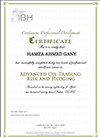
– Up to 40 CPD credits Internationally Recognised Certificate of the IBH and ICE Education
– Visa support (if needed)
– Social programme
Bank transfer/ Card payment
ICE Education: Sancroft, Rose Street, Paternoster Square, London EC4M 7DQ (Second Floor)
To be confirmed

Demonstrate your new skills and gain a step up in your career with globally recognised CPD certifications.
*Special group enrolment pricing
UK-based companies are subject to 20% UK VAT
8 - 12 June 2026
Rotterdam, Netherlands
5 days
To Be Confirmed - To Be Confirmed
ICE Europe, London, UK
10 days
To be confirmed - To be confirmed
ICE Europe, London, UK
5 days
5 - 9 October 2026
ICE Europe, London, UK
5 days
To Be Confirmed - To Be Confirmed
ICE Europe, London, UK
5 days
Connect with us
About us
For experts & partners
Learning Solutions
For experts & partners
Policies
Copyrights International Business House 2026 All rights reserved.